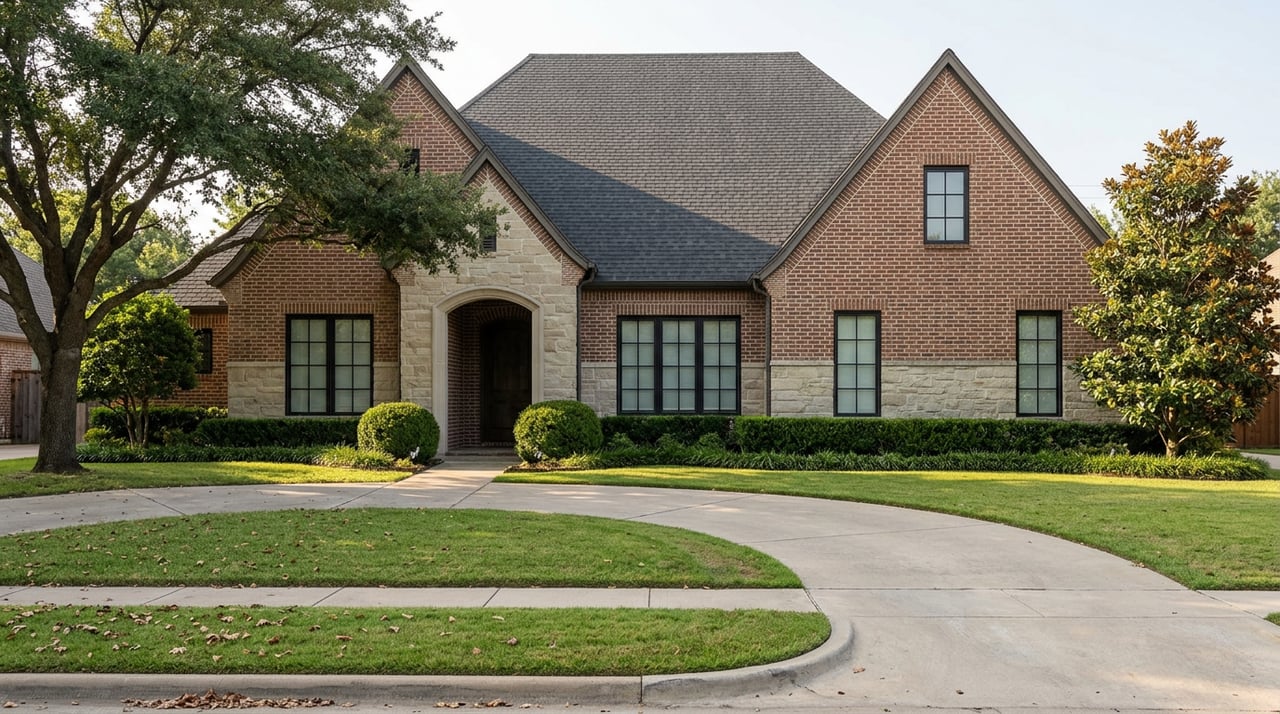
Same Price, Different Bill: What the Village Name on a Woodlands Listing Actually Means
Two listings turn up in the same afternoon search, both priced at $725,000, which sat at the median for single-family sales across The Woodlands in March 2026. Comparable square footage. Comparable finish level. On paper, they read like the same purchase with a different street name attached.
Then the loan estimates come back, and the annual carrying costs on those two houses are not the same number. Not because one house is in worse condition or one lender quoted a better rate. Because "The Woodlands" is not one tax jurisdiction wearing one name. It is a bundle of overlapping governments, and which ones apply to a given address depends on the village, sometimes down to the street.
The Woodlands has never incorporated as a city. It operates as a Township, a Texas governance structure that funds contracted police service, fire protection, parks, and community programs through sales tax revenue and a Township property tax rate rather than a traditional municipal tax base. For 2026, the Township's adopted rate sits at $0.1714 per $100 of taxable value, a figure that applies fairly uniformly across most of the core community.
That uniform layer is precisely why it is not the source of the spread between two similarly priced homes. The Township rate is close to a constant. The variable sits one level down, in the mix of county, school district, and municipal utility district that actually differs by address.
Most of The Woodlands falls inside Montgomery County and is zoned to Conroe Independent School District, with water, sewer, and drainage handled by one of several municipal utility districts under Woodlands Water. But that pattern breaks in specific, named pockets:
| Village or section | County | School district | Utility or municipal layer |
|---|---|---|---|
| Grogan's Mill, Panther Creek, Cochran's Crossing, Indian Springs, most of Sterling Ridge, College Park, Alden Bridge, Carlton Woods | Montgomery | Conroe ISD | Individual MUD |
| Creekside Park and Carlton Woods Creekside | Harris | Tomball ISD | MUD 386 |
| May Valley (within Sterling Ridge) | Montgomery | Magnolia ISD | MUD |
| Dulcimer Woods, Avalon Oaks, Cantwell Forest (Grogan's Forest sections 5, 6, 7) | Montgomery | Conroe ISD | City of Shenandoah tax, no MUD or Township tax |
Two houses can sit a few minutes apart and answer to a different county courthouse, a different school district's bond calendar, and a different MUD board setting its own rate each year at a public meeting. A 2026 breakdown of Woodlands carrying costs pegs the combined effective tax rate community-wide somewhere between roughly 2.1 and 2.7 percent of assessed value depending on which MUD covers the address, enough spread that two homes priced identically can land more than $2,000 apart on the annual bill. That is not a rounding difference. It is the difference between two genuinely separate fiscal systems wearing the same community brand.
Cochran's Crossing is one of the community's earliest villages, with roots back to the 1970s and 80s, and its resale homes currently cluster into the low-$500s at the median. It sits entirely in Montgomery County, is zoned to Conroe ISD, and has carried its own established MUD for decades.
A short drive away, sections of Creekside Park price into a similar mid-$500s band. Creekside Park sits in Harris County, is zoned to Tomball ISD instead of Conroe, and its utility costs run through MUD 386. Same rough price tier, different county, different school district, different utility board setting a different rate on a different schedule.
The age gap matters too, in a practical rather than a value-judgment sense. Cochran's Crossing, as one of the earliest villages, tends to carry more original-era systems, which shifts the inspection conversation toward roofs, HVAC age, and prior renovation quality. Creekside Park, developed later, tends to arrive with newer systems and more recent floor plans. Neither pattern makes one village a better buy than the other. It means a buyer comparing the two by price alone is comparing two different products dressed in the same median number.
The clearest proof that a Woodlands address is a bundle of separate governments rather than one thing sits in three small sections of Grogan's Forest. Dulcimer Woods, Avalon Oaks, and Cantwell Forest were annexed into the City of Shenandoah in 2003. Because of that annexation, homeowners there pay no Woodlands MUD tax and no Township tax at all. Instead, they pay Shenandoah's own city tax rate plus an emergency services district charge.
What makes the arrangement genuinely unusual is that the original Woodlands architectural covenants never went away. Residents in those three sections remain bound by Woodlands standards for things like exterior paint, even though the city that collects their taxes and issues most of their permits is Shenandoah. The two governments have worked out a joint process so residents are not filing separately at two counters for every project, and Shenandoah's own permitting page lays out which changes need city sign-off, which need Woodlands covenant approval, and which need both. Repaint the house, and Woodlands Township is the office of record. Change the siding, and it is Shenandoah. Do both at once, and the paperwork goes to both.
If a listing simply says "Grogan's Forest," that name alone does not tell you which government sends the tax bill or which office signs off on a fence. The section matters as much as the village.
A comparably priced pair of Woodlands listings can carry a different total cost of ownership and a different approval process for the fence you want to build next spring, and none of it shows up in a standard portal search filter. It only becomes visible once you know which government is actually on the other end of the bill.
Does moving from one Woodlands village to another change my property tax rate? In most cases, yes. MUD numbers differ by village, and in some sections the county and school district differ too, so there is no single Woodlands-wide tax rate to quote.
Are the Grogan's Forest sections still part of The Woodlands? For architectural standards, yes. Original Woodlands covenants still govern exterior changes there even though the 2003 annexation moved the three sections into the City of Shenandoah for tax billing and most municipal permitting, which is why some projects need approval from both offices.
Where can I check the exact tax entities for a specific address before I write an offer? The Township publishes an annual tax comparison chart broken out by village and MUD, and the Montgomery and Harris County tax offices maintain address-level lookups. An address-specific check before an offer is the only reliable way to know the real number, rather than relying on a village-wide average.
Twenty-two years of closing transactions across these villages has meant learning which MUD number sits behind which street, and which section of which village answers to which office. If you are comparing two Woodlands listings that look identical on price and want the real picture behind each one, Yolanda Ingram can walk you through it, or you can request a personalized home valuation to see how your own address fits into this picture.


Rooted in resilience and driven by purpose, I approach each real estate journey with heart, integrity, and a commitment to building lasting relationships—because every home marks a new beginning worth celebrating.
YOLANDA INGRAM
1335 Lake Woodlands Dr Ste C The Woodlands, TX 77380