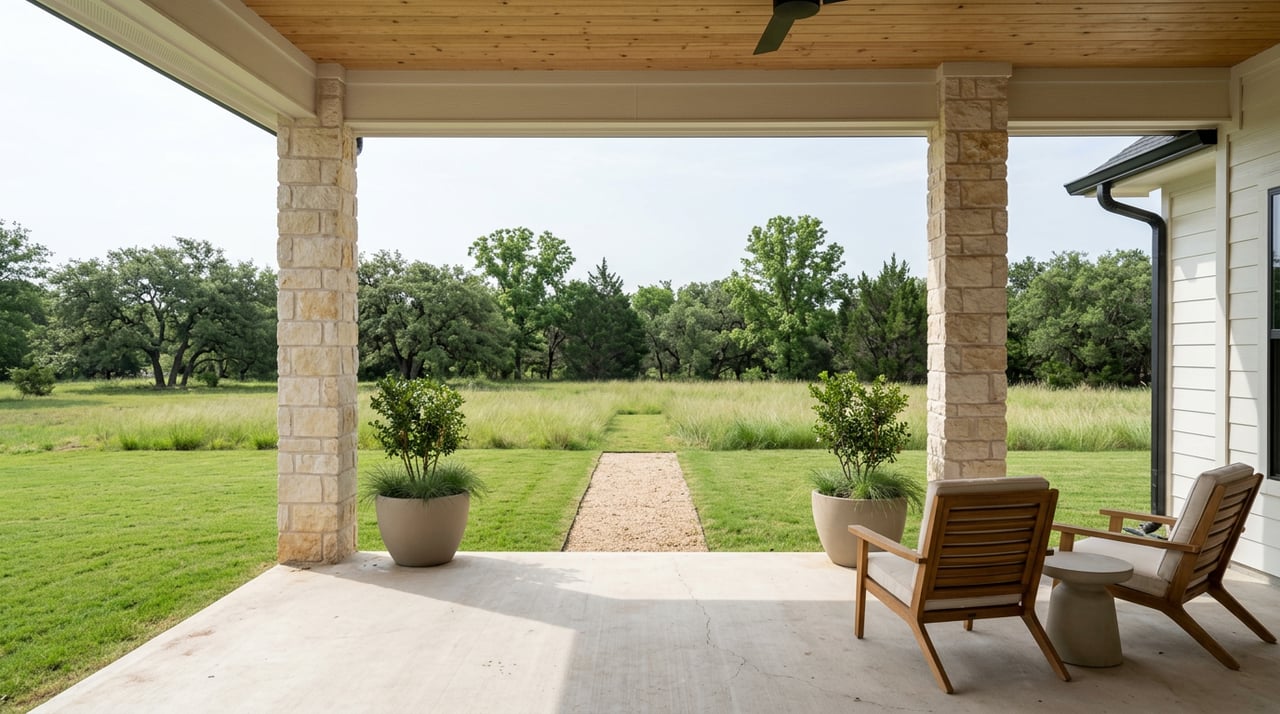
Guide To Buying A Country Home Around Woodson
Dreaming of big skies, quiet nights, and room to roam around Woodson? You are not alone. Buying a country home in Throckmorton County can be rewarding, but it also comes with extra homework on wells, septic, access, and mineral rights. This guide breaks down what to verify, who to call, and how to finance a rural purchase with confidence. Let’s dive in.
Woodson is a small, incorporated town in southeastern Throckmorton County with a population in the low hundreds. It offers a slower pace and a true rural feel, while keeping you within an easy drive to larger hubs. Woodson sits on U.S. Highway 183 and Farm Roads 209 and 1710, and it is roughly 64 miles to Abilene, 33 miles to Graham, and about 120 miles to Fort Worth depending on your route. You can review local context and history in the Texas State Historical Association’s entry on Woodson, Texas.
County services, courthouse functions, and appraisal records are handled in Throckmorton, the county seat. For parcel questions, road maintenance, and local notices, start with the Throckmorton County official site.
Country living changes your routine. Before you fall in love with a porch view, map these basics from the property address:
Electricity in most of Texas is a retail-choice market. The local wires company is called the Transmission and Distribution Service Provider, or TDSP. You choose a Retail Electric Provider for billing, but the TDSP owns the poles and lines. Ask the seller for a recent electric bill to identify the meter and TDSP, and confirm whether service already runs to the house or if you will need a pole extension or meter set. For a helpful explainer, see what a TDSP is and how it works.
Many country homes use propane for heating or cooking. Confirm whether the tank is owned or leased, who delivers, and typical winter usage. If you plan to add solar or an EV charger, ask the TDSP about interconnection rules and whether the transformer has capacity for upgrades.
Most rural homes around Woodson rely on a private water well and an on-site septic system. If you plan to use FHA or VA financing, expect lender-ordered water testing and documentation. FHA’s minimum property rules address well yield, water quality, and separation distances between wells and septic systems. Review the relevant guidance in HUD Handbook 4000.1 to understand common requirements for private wells and onsite sewage.
On any loan type, treat this as essential due diligence:
Groundwater and well rules can involve regional districts. To see if a Groundwater Conservation District covers your parcel, consult the Texas Water Development Board’s directory of groundwater conservation districts.
Broadband can be limited in rural parts of Throckmorton County. Availability varies by address, and options may include fixed wireless, fiber, DSL, or satellite. Do two quick checks when you tour:
State broadband efforts are ongoing, but plan your purchase based on today’s service at the specific address.
Legal access matters. Confirm whether you have deeded access, a recorded easement, or a private road agreement. If the home is on a county road, ask the listing agent to verify county maintenance. If it is a private road or shared drive, request the written maintenance agreement and understand any costs. Local offices listed on the county website can help you verify road status.
Also look for low-water crossings, cattle guards, bridges, and seasonal conditions. Budget for gravel or road-base upkeep if you have a long driveway.
Rural parcels often include utility or pipeline easements. The title commitment and survey will show recorded easements, encroachments, and any access rights to adjoining properties. Ask for a current survey and review the title commitment exceptions early so you have time to resolve questions before the option period ends.
In Texas, the mineral estate can be separate from the surface. Buying the land does not always mean you get the minerals. If minerals are severed or leased, the mineral owner or lessee may have rights to reasonable surface use to access minerals. Ask the seller if minerals convey, and study recorded deeds and the title commitment for reservations and leases. For a practical overview on identifying mineral ownership, see Texas A&M AgriLife’s guidance on finding out if you own mineral rights.
Even rural, higher-elevation tracts can include creeks, draws, or flood-prone areas. Enter the exact address in the FEMA Flood Map Service Center to check whether any part of the parcel is in a Special Flood Hazard Area. If so, lenders will require flood insurance, and an elevation certificate can help with underwriting or premiums. Start with the FEMA Flood Map Service Center.
Different loan programs can fit different rural properties. Here are the common paths to discuss with your lender:
Standard homeowner policies do not cover flood damage. If the FEMA map places your site in a high-risk flood zone, your lender will require flood insurance. Use FEMA maps early in your search.
For taxes, Texas has no state property tax. Local taxing units set rates, and the Throckmorton Central Appraisal District appraises property and lists taxing entities. Always pull the most recent assessed value and tax bill and ask about agricultural or wildlife special valuations that may apply. Visit the Throckmorton Central Appraisal District and the Texas Comptroller’s overview of property tax basics.
Use this quick list before you write an offer and during your option period.
Country properties require a little more planning. Build these into your annual budget and seasonal checklist:
For parcel-level tax questions and special valuation programs, coordinate with the Throckmorton Central Appraisal District.
Buying a country home around Woodson can be straightforward when you verify the right details early. Focus on utilities, wells and septic, legal access, flood risk, mineral rights, and financing fit. Surround yourself with a rural-experienced agent, a local title company, and the right inspectors so you can move ahead with confidence.
If you are exploring acreage or a weekend home near Woodson and want a calm, concierge-style process, connect with Yolanda Ingram. With two decades of guidance and a hands-on approach, you will get clear next steps, reliable vendor introductions, and a smooth path to your new country retreat.




Rooted in resilience and driven by purpose, I approach each real estate journey with heart, integrity, and a commitment to building lasting relationships—because every home marks a new beginning worth celebrating.
YOLANDA INGRAM
1335 Lake Woodlands Dr Ste C The Woodlands, TX 77380