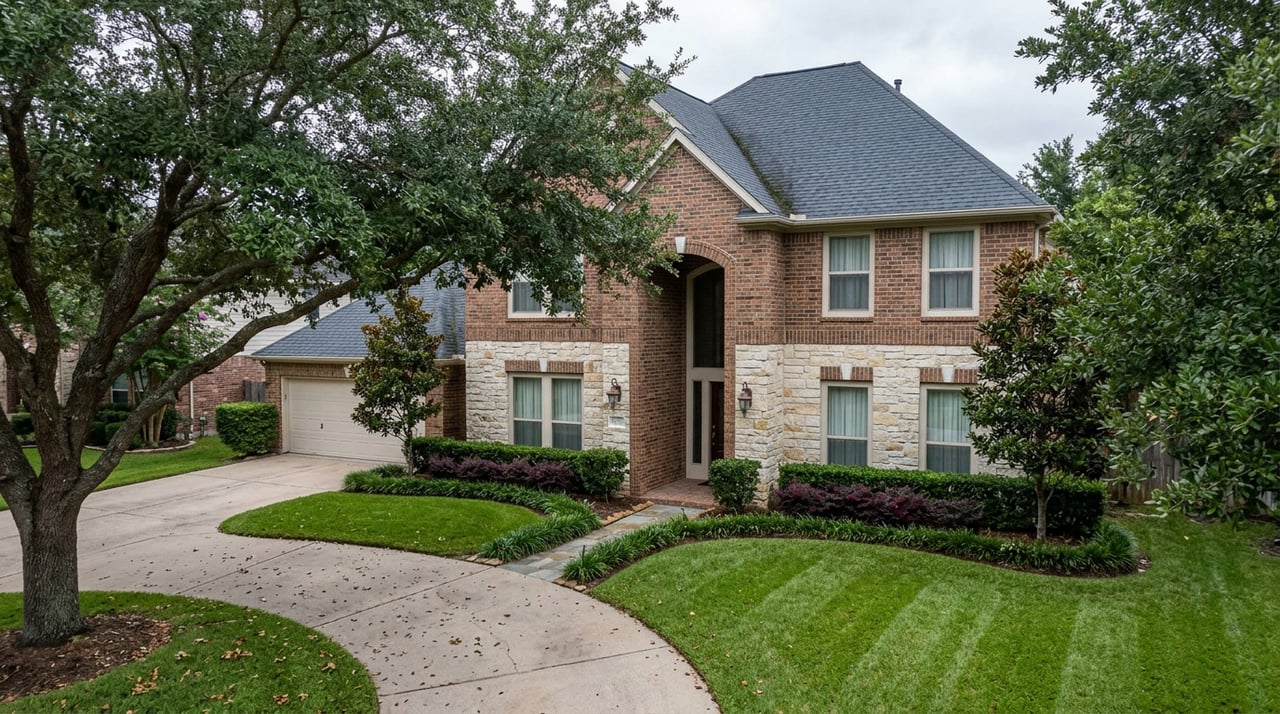
The Water Question Woodson's Reserve's Tax Rate Can't Answer
Buyers cross-shopping Woodson's Reserve against Woodforest, Stillwater, or other Spring-area master-planned communities almost always start with the same spreadsheet: HOA dues in one column, MUD tax rate in the next. It is a reasonable way to compare communities on paper. It is also missing the one detail that actually surfaced three times in the last two and a half years: what happens to the water itself when a well fails.
Montgomery County Municipal Utility District No. 105, the utility that serves Woodson's Reserve, does not run on a single self-contained well system. It shares emergency plumbing with three neighboring districts, MCMUD 152A, 152B, and 152C, through what the district calls an interconnect. That arrangement has been activated at least three separate times since April 2024, once because MC105's own well failed, and twice because a neighboring district's well did. None of that shows up in a tax comparison table. All of it shapes what living in this specific community actually feels like during a dry summer.
The pattern is worth laying out plainly, because each incident reveals a different side of the same arrangement.
| When | What failed | How the water kept flowing |
|---|---|---|
| Spring 2024 | MC105's own well | The district's operator rerouted customers onto two emergency interconnects with adjacent suppliers, then imposed Stage 2 restrictions once it became clear the interconnects alone couldn't cover full outdoor demand. Replacement well equipment wasn't back online until the following January. |
| Fall 2025 | A well serving neighboring districts MCMUD 152A and 152B | MC105 issued Stage 1 voluntary restrictions of its own, not because its water plant had failed, but to protect pressure across the interconnected network its own system depends on. |
| Summer 2026 | A well serving neighboring MCMUD 152C | MC105 activated its interconnect with 152C to keep water moving, then rescinded restrictions once the shared system stabilized, crediting the interconnect for maintaining service continuity for Woodson's Reserve. |
Read individually, each of these looks like a routine utility notice, the kind every Texas subdivision posts and forgets. Read together, they describe a system where Woodson's Reserve has been on both ends of the same arrangement, first as the district in trouble drawing on its neighbors, then twice as part of a network absorbing someone else's failure. That is a meaningfully different story than "the community has a MUD like every other community in Montgomery County."
An interconnect is exactly what it sounds like: a physical pipe connection between two utility districts that lets one supply water to the other during an emergency. Montgomery County has dozens of small MUDs, most built to serve a single development, and interconnects are the standard way these districts backstop each other when a well pump fails, a plant needs emergency repairs, or drought conditions strain supply. The district's own website describes the goal plainly, as regional water security shared across neighboring communities, not redundancy built for any one subdivision alone.
That is a sound engineering decision. A single small district serving roughly a thousand rooftops cannot justify building the kind of backup capacity a large municipal system can. Sharing infrastructure with neighbors is how small districts get resilience they couldn't afford individually. The tradeoff is that your water reliability is only as good as your neighbor's well, and vice versa. When 152C's well failed this summer, Woodson's Reserve residents felt the effects of a mechanical problem in a district many of them have never heard of.
Here is where the comparison-shopping spreadsheet gets misleading in a different way. MUD tax rates are not fixed. They are built to decline over time as a district pays down the bonds it issued to build its original infrastructure, the wells, plant, and pipes that eventually serve every home in the district. A 2020 tax comparison published by The Woodlands put Woodson's Reserve's MUD-specific rate at $1.35 per $100 of assessed value, one of the higher rates among nearby communities at the time, with Woodforest and Stillwater both quoted around $0.88. A separate estimate published a couple of years later put that same MUD 105 rate closer to $0.89 per $100, consistent with the normal amortization curve every MUD follows as its debt gets retired and its tax base grows. Neither figure should be read as this year's rate. The only way to know the number that will actually apply to a 2026 tax bill is to check the district's proposed rate directly.
That decline is good news for a homeowner's annual bill. It says nothing about the well. The tax rate measures how much debt the district is still paying off. It does not measure how many wells are online, how old the equipment is, or how often the district has needed its neighbors' help to keep water pressure up. A falling MUD rate and a well that failed twice in two years are two completely unrelated facts that happen to live on the same utility bill.
Montgomery County MUD 105 has a public hearing scheduled on its proposed tax rate for the 2026 tax year on Tuesday, October 6, 2026, held at the offices of Allen Boone Humphries Robinson LLP in Houston, with a teleconference option listed on the district's website. Anyone comparing Woodson's Reserve against another community right now has a real, dated opportunity to see the actual proposed number rather than working from an estimate that could be several years old.
A buyer weighing Woodson's Reserve against a neighboring master-planned community is really asking two separate questions that get collapsed into one line item on most comparison sheets. The first is what you'll pay. The second is what you're actually getting for it. The MUD tax rate answers the first question. It does not answer the second.
Questions worth asking before writing an offer in any MUD-served community, not just this one:
None of this is a reason to avoid Woodson's Reserve. Interconnected water systems are common across Montgomery County's newer developments, and MC105's response, rerouting supply, notifying Conroe ISD and the South Montgomery County Fire Department, restoring service within documented timeframes, is what a functioning small utility district is supposed to do under stress. The point isn't that the system failed. It's that the system's real track record lives in utility board notices, not in the tax comparison table most buyers stop at.
Does an interconnect activation affect my water bill? MC105's own notices from its 2024 well failure stated the district had no plans to levy the surcharges outlined in its drought contingency plan during that event, and that an insurance claim had been opened for the repair costs. Bill impacts from utility emergencies vary by district and by the specific cause, so this is worth confirming directly with the district rather than assuming either outcome.
Is Woodson's Reserve's water system unusual for this reason? No. Interconnects between small Texas MUDs are standard practice, not a red flag specific to this community. What's unusual here is simply that the arrangement has been tested three times in a short window, giving buyers an actual track record to look at instead of a theoretical policy.
Where can I check the current MUD tax rate myself? The Montgomery County Tax Office and the district's own website post proposed rates ahead of the required public hearing each year, including the October 6, 2026 hearing for the current tax year.
If you're weighing Woodson's Reserve against another Spring or Conroe-corridor community and want the full picture, the tax rate, the utility history, and how either compares to what you'd actually pay in a neighborhood like Benders Landing Estates or The Woodlands, that is exactly the kind of comparison Yolanda Ingram walks clients through before an offer ever gets written. Request a personalized home valuation and a straight answer on what a specific address in Woodson's Reserve actually costs to own, not just to buy.




Rooted in resilience and driven by purpose, I approach each real estate journey with heart, integrity, and a commitment to building lasting relationships—because every home marks a new beginning worth celebrating.
YOLANDA INGRAM
1335 Lake Woodlands Dr Ste C The Woodlands, TX 77380